

Careful readers of Pembroke's most recent annual budget may have noticed a baffling line item halfway down page 43, just below the entry for Town Landing and right above that of the Town Memorial Committee: Town Clock Winder.
What exactly is a Town Clock Winder and why does Pembroke need one you may ask? For the answers to those questions, we asked Robert Hynes, clock winder for the Town of Pembroke for the past 40 years, to share the story that is rich in history and the complications of government and nature.
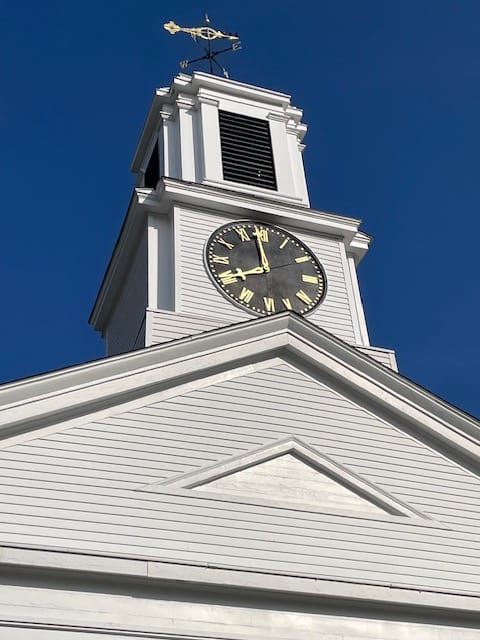
In 1837, a new church building was built to replace the one that had fallen into disrepair and was destined for demolition. Designed by architect Alexander Pariss, the new church building included a clock tower that would house the bell and clock. With the new bell came the current clock mechanism, crafted by Aaron Willard Jr. and presented to the Town by the Reverend Morrill Allen, with the stipulation that the Town of Pembroke pay for the maintenance of the clock, keeping it in good repair. In April 1893 the clock tower was struck by lightning, sending the pieces of the clock in all directions, Hynes explained. Henry Baker, who was the clock caretaker at the time, located all the parts and reconstructed the clock.
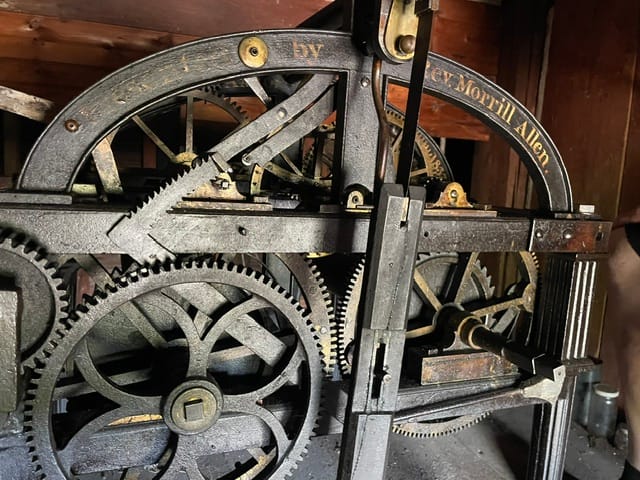
While First Church operated the church, the bell tower was overseen by the town, Hynes explained. In 1907, this arrangement became official, with the town taking responsibility for the clock, including paying for the clock winder.
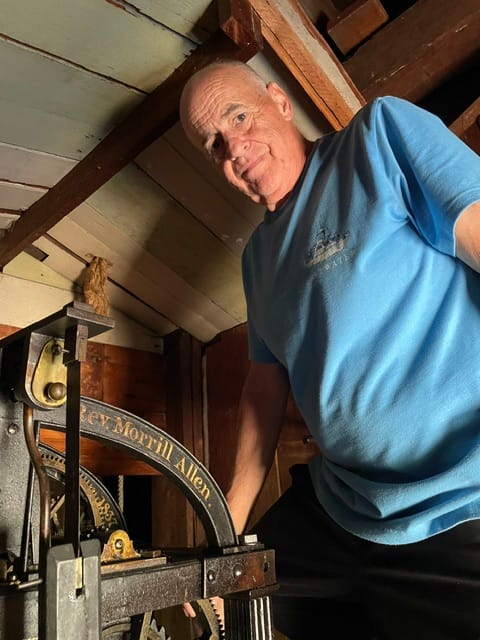
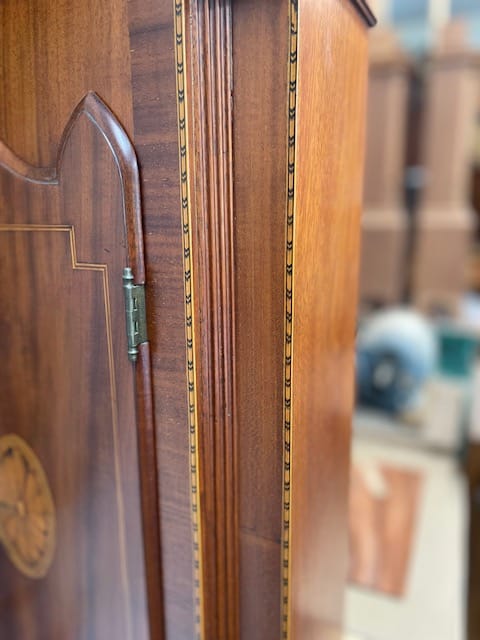
Hynes' Pembroke workshop is testament to his 50-plus year commitment to a profession that began almost by chance. All manner of clocks – grandfather, grandmother, banjo and more – line the workbenches and walls in various stages of repair. Hynes said he now focuses on the casings of the clocks, building new housings for old and new clocks alike, just for his own enjoyment.
At 16, Hynes recalled, he was in school with Steve Campos, son of clockmaker Foster Campos, who said they needed someone to cut the lawn at a shop in Weymouth, owned by Elmer Stennes. (As an aside, if your tastes run to true crime drama, you might want to read more of his life and death here.)
On rainy days, Hynes would go into the shop and work at some of the clock construction and repair, and he was hooked. In 1973, Foster Campos left Stennes and opened his own shop off Schoosett Street. Hynes followed, working with Campos for over 30 years. It was Campos who mentioned Pembroke's clock winder position to Hynes, who then approached the town selectmen to apply. At first, there were two clock winders, Hynes and a younger man. But the duties of the job did not sit well with the younger man, who soon left Hynes as the town's sole clock winder.
The job is not for the feint of heart.
To enter the bell tower, one must climb a flight of stairs then two wooden ladders to get to the area of the clock mechanism. There are door hatches involved, good balance is a necessity, and this climb is something Hynes does at least once a week, more often if, for instance, the clock is wrong and must be adjusted. There are two crank shafts, one for the clock and the other for the bell, and both are wound each week to keep the clock and bell on schedule. Hynes winds both by hand, one at a time. The clock is a mechanical clock, meaning two large pieces of granite act as the counterweight for the mechanism – basically, they drive the gears by slowly descending from their highest point when wound. (If you are interested in learning more about how a clock works, check out this article.)
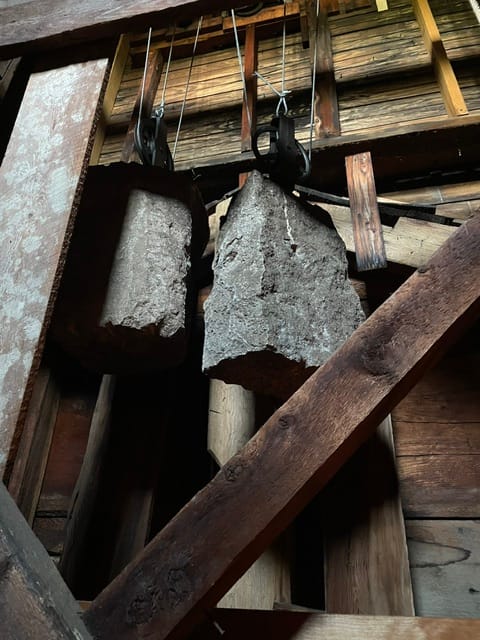
Hynes ascends the bell tower to make sure the clock and bell are wound correctly, so as to not lose time or miss the hourly bell toll. He oils the gears and keeps on top of any repairs needed. Replacement parts must be custom made from bronze and brass. The face of the clock, which is maintained by the church, used to have a door that allowed access from the interior. Today, however, the face can only be reached from the outside, so a bucket truck is needed to do any adjustments.
What happens when Hynes goes on vacation? "I don't really go on vacation," he noted. "If I was to go, I would only go for a week. Wind it before I go and then when I got back."
Asked if he give tours often, Hynes replied, "I've done this job 40 years, no one from the town has ever asked me to see it."
The next time you see Town Clock Winder in the town budget, you will know a bit more about the clock, and its history. And when you drive by First Church in Pembroke, be sure to glance up at the almost 200-year-old clock and consider the dedicated individual who has kept it running smoothly for close to a quarter of its lifetime.


