In the 1980s and 1990s, plastic packaging became increasingly popular. Less expensive and more durable than paper or glass, plastics quickly replaced many traditional containers, bottles and bags.
As plastic use expanded, environmental advocates raised concerns about the growing volume of waste and proposed bans on items such as plastic bags and Styrofoam. In response, the plastics industry promoted the benefits of plastic products while encouraging recycling as the solution. It also helped establish systems for collecting and reclaiming plastic materials.
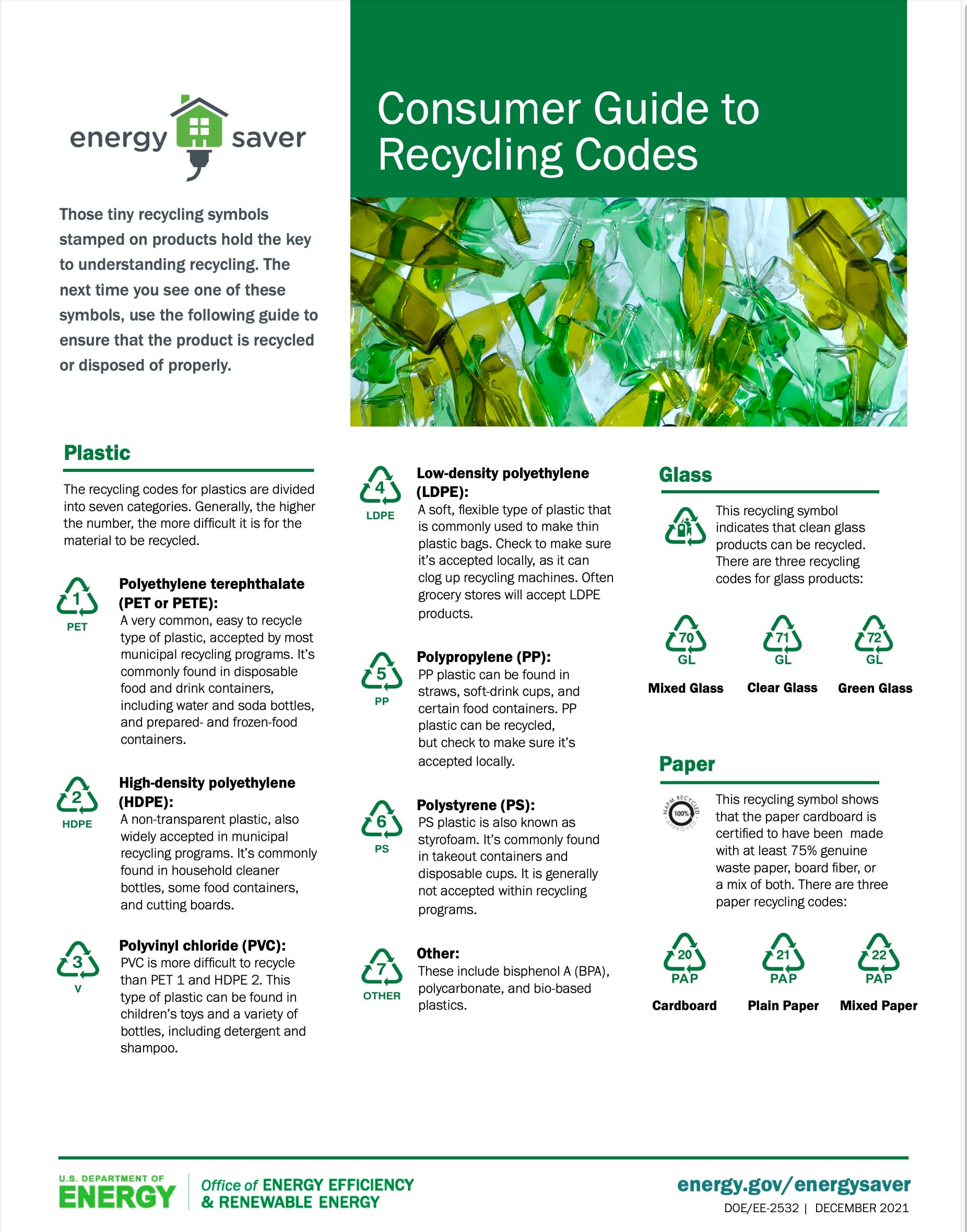
To make recycling programs work efficiently, recyclers needed a way to identify different types of plastic. The result was the Resin Identification Code (RIC) system: numbers 1 through 7 enclosed within the triangle of chasing arrows.
This is where much of the confusion begins.
The numbers identify the type of plastic resin used to manufacture a product. They do not indicate whether an item is recyclable. Many people see the chasing arrows and assume an item belongs in the recycling bin when that isn't always the case.
Sometimes the symbol simply indicates that a product contains recycled material, not that it can be recycled again. A good example is many paperboard take-out containers. Although they may be made from recycled paper, their plastic lining prevents them from being recycled. These containers are compostable, but only in commercial or industrial composting facilities, which are currently not available in Pembroke.
A 1993 paper published by the Society of the Plastics Industry (SPI) and the National Recycling Council stated that the arrows were intended to indicate only that a container was "potentially recyclable." https://p2infohouse.org/ref/30/29832.pdf
Every plastic product is assigned one of the following resin codes—even Styrofoam and black plastic.
#1 – PET or PETE (Polyethylene Terephthalate) Commonly used for water bottles, soda bottles and peanut butter jars. This clear plastic is widely accepted in curbside recycling.
#2 – HDPE (High-Density Polyethylene) Found in milk jugs, shampoo bottles, detergent bottles and cleaner containers. This rigid and opaque plastic is commonly recyclable.
#3 – PVC (Polyvinyl Chloride) Used in plumbing pipes, vinyl flooring, window frames, and insulation. PVC is not accepted in curbside recycling but can be brought to the Wilson E. Whittaker Recycling Center.
#4 – LDPE (Low-Density Polyethylene) Used for grocery bags, bread bags, produce bags, shrink wrap and zipper storage bags. These thin, flexible plastics should never go in curbside recycling but can often be recycled through grocery store and retail drop-off programs.
#5 – PP (Polypropylene) Used in yogurt tubs, medicine bottles, and many take-out containers. This durable plastic is often recyclable. However, black plastic containers are typically made from polypropylene with a pigment called "carbon black," which cannot be detected by optical sorting equipment at many recycling facilities. As a result, black plastic is not accepted in Pembroke’s curbside recycling.
#6 – PS (Polystyrene) Used for foam coffee cups, meat trays, coolers, packing peanuts, and other Styrofoam products. Polystyrene foam can contaminate other recyclable materials. It is not accepted in Pembroke and should be trashed.
#7 – Other or Mixed Plastics This category includes bioplastics, multilayer plastics, nylon, and products such as sunglasses. These materials are not recyclable, although some items may be accepted through specialty recycling or donation programs these often are sent to landfills or incinerators.
While the resin identification codes help recycling facilities sort materials, they are not the best guide for consumers. Instead of relying on the number inside the arrows, focus on the type and shape of the item.
As a general rule, plastic bottles, jars, jugs, tubs, and clamshell containers are acceptable in curbside recycling. Thin, flexible plastics such as bags and film, should be dropped off at local grocery stores and retailers. Bulky rigid plastics, like toys, lawn chairs and clothes hangers should be kept out of the recycling bin and brought to the Wilson E. Whittaker Recycling Center.
When in doubt, use the Recyclopedia from Recycle Smart Massachusetts. Simply enter the item you want to recycle, and it will tell you whether it belongs in the recycling bin—and, if not, the proper way to dispose of it.