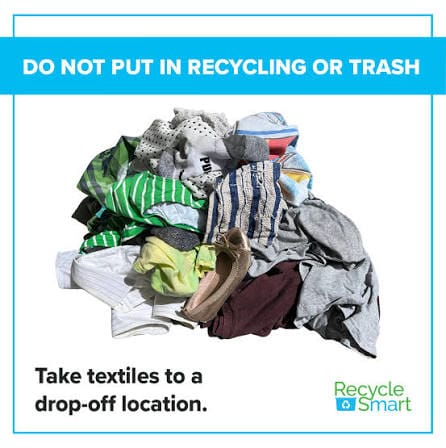
In November of 2022 Massachusetts enacted a statewide waste ban prohibiting the disposal of clothing, footwear, bedding, towels, curtains, fabric, or textiles in household trash and curbside recycling. Upcycling fabrics, such as bed sheets, towels, clothing, stuffed animals, and backpacks is the most responsible and sustainable practice. Upcycling is the process of transforming discarded, unwanted, or waste materials into new products of greater quality or environmental value. Unlike standard recycling (which breaks down materials to their base components) upcycling repurposes items intact, keeping them out of local landfills and reducing overall consumption.
Clothing and fabric can become tangled in the sorting equipment and conveyor belts at recycling facilities, causing costly delays and requiring manual removal. Fortunately, unwanted textiles are extremely valuable. Recycling mills seek out fabrics because they can be re-dyed, shredded into fibers, or spun into new yarn. Even stained, torn, or heavily worn items can often be put to good use. An old teddy bear may become stuffing for a new car seat, ripped jeans can be turned into insulation, and worn athletic clothing can be transformed into products such as carpet padding or yoga mats. The possibilities are nearly endless.
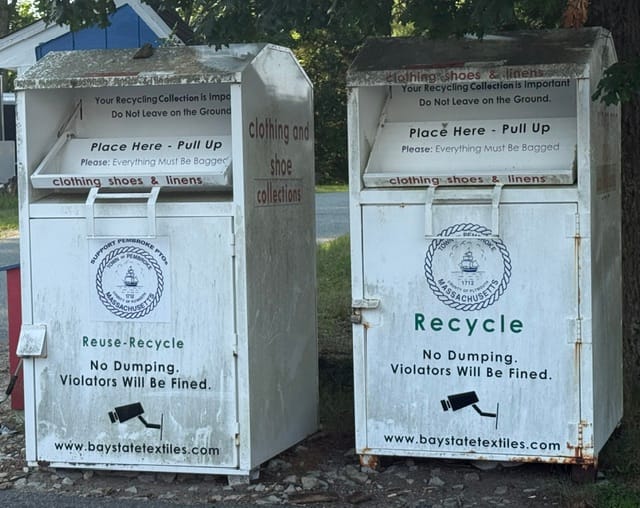
Pembroke has multiple clothing and textile donation kiosks managed by Bay State Textiles:
- Pembroke Town Hall
- Pembroke High School
- Hobomock Elementary School
- North Pembroke Elementary School
- Bryantville Elementary School
- Pembroke Community Middle School
At Bay State Textile graders sort the clothing, shoes, and household linens into multiple categories or grades. Approximately 50% of the material is packed for export to developing countries as used clothing. The second grade, the wiper grade, consists of material that is absorbent, such as heavy cotton, flannel, t-shirts, towels, and denim. Items of this grade are cut into wiping rags and resold to companies throughout the United States for cleaning equipment at industrial plants. Items of the last grade, fiber material such as carpet padding, polyfill, and insulation are shipped to fiber mills to be ground down and made into new material.
If your clothing or household textiles are still in good condition, consider donating or selling them through a local thrift or consignment shop. Extending the life of these items is one of the most sustainable choices you can make.
However you choose to part with unwanted clothing and textiles—whether by donating, reselling, upcycling, or recycling—remember one simple rule: keep them out of your trash and recycling bin. Giving textiles a second life helps conserve resources, and keeps valuable materials out of our landfills.
For more information about Massachusetts Clothing and Textile Recovery Programs please visit: https://www.mass.gov/guides/clothing-and-textile-recovery